A 153.6kWh modular battery storage system is a scalable commercial and industrial energy storage solution designed to store electricity for solar self-consumption, peak shaving, load shifting and backup power.
EnerShare's Energy-CORE 1.0 high voltage battery reaches 153.6kWh through six parallel towers, each configured with 25.6kWh of LiFePO4 battery capacity. The system uses a modular high-voltage architecture (192–512 V per tower), IP65 protection and direct module-to-module connections.
Its actual output power depends on the battery current limits, inverter capacity and approved system configuration: each tower supplies 30 A continuous, so six towers deliver roughly 72 kW at 400 V for about two hours. It is particularly relevant to small commercial sites that need modular capacity, flexible installation and scalable energy storage.
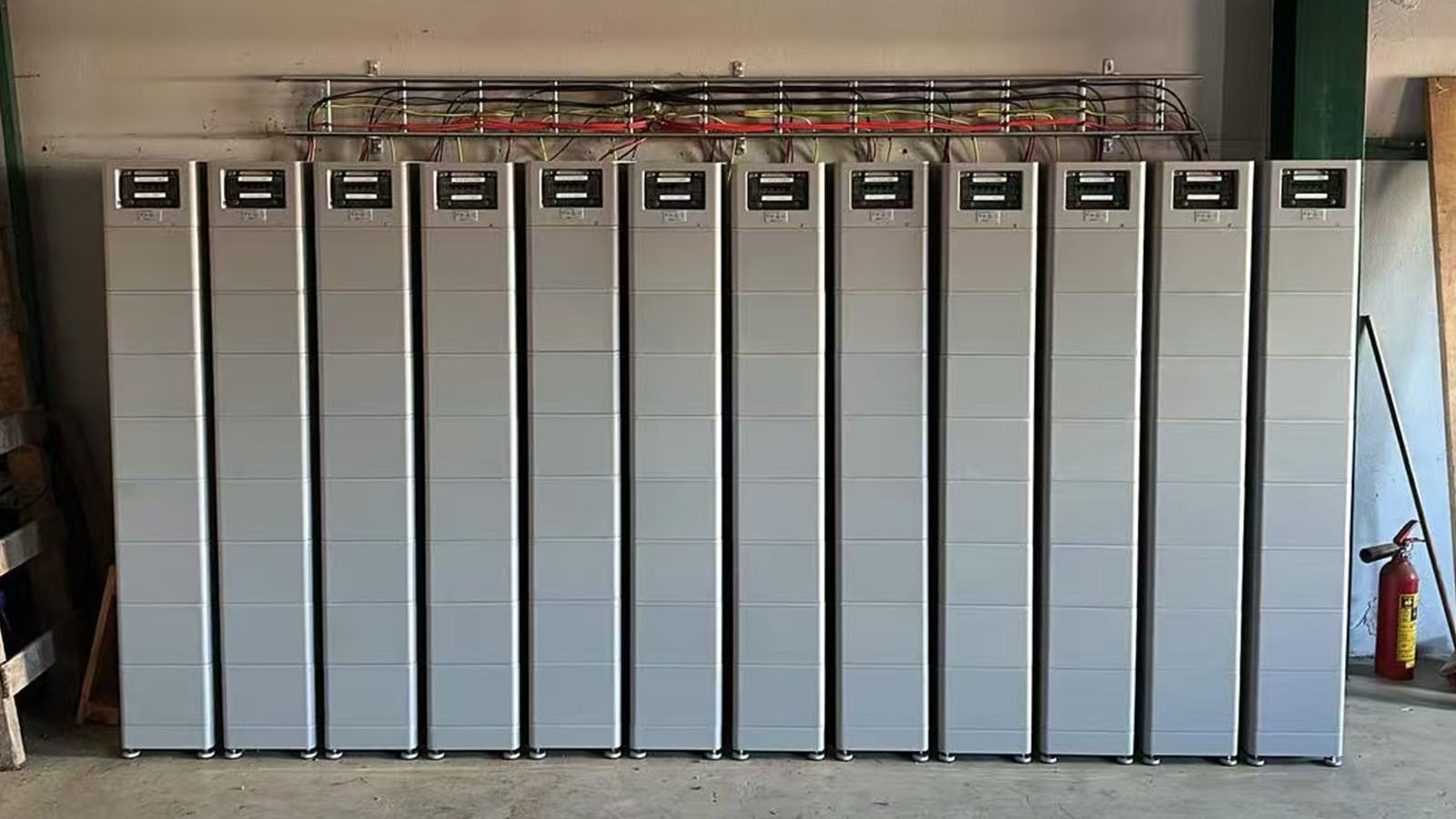
Anyone who has priced a 100–200 kWh battery system on either side of the Atlantic in the last two years has sat through the same meeting. The vendor opens with a price per kilowatt-hour, the plant manager opens with last quarter's electricity bill, and everyone argues about a number that barely matters. At this scale, €/kWh prices the input that is abundant — cells — and ignores the three things actually scarce on a small commercial site: dispatchable power at the right duration, qualified electrician hours, and calendar time between signature and commissioning.
What follows is written from field practice rather than from a datasheet: from sizing reviews for European workshops and hotels, from American sites where the AHJ has the final word, and from the recurring February morning when a service technician is re-torquing terminals in an unheated plant room and wondering why the industry still builds batteries this way.
The number is not arbitrary. It is the point where a small commercial load profile stops needing a container and starts needing real power: six towers of 25.6 kWh, one standard inverter, one wall or corner of a plant room, and no crane.
Below it sits residential storage — 5 to 20 kWh, single-phase, built around evening self-consumption. Above it sits the 500 kWh to 1 MWh container, which arrives on a lorry, needs a foundation and a fire strategy, and makes sense once a site runs multiple shifts. Small C&I sits in between: annual consumption of roughly 20–300 MWh, peak demand of 30–150 kW, a 15-minute billing interval that decides the demand charge, and a building that is already occupied.
Three commercial facts make this band worth designing for properly. Demand charges commonly account for 20–50% of a commercial electricity bill. Most small-site peaks last 30–90 minutes, which is shorter than a shift and longer than a UPS event. And the savings only start when the system is commissioned — not when the purchase order is signed.
That is why the 153.6kWh stackable battery system is best treated as a sizing category rather than a product: it defines what a small site can do without civil works, and what it must buy instead once it outgrows that envelope.
A battery is a reservoir; a plant manager's problem is a flow problem. Energy (kWh) tells you how long you can run; power (kW) tells you what you can run at once. In this product class, power is set by current limits and the inverter, not by the nameplate capacity.
The arithmetic for the EnerShare platform is straightforward and worth memorising, because it is the first thing a serious buyer checks:
| Configuration | Continuous current | Continuous power (≈400 V) | Duration at full power | What it covers |
|---|---|---|---|---|
| 1 tower — 25.6 kWh | 30 A | ~12 kW | ~2.1 h | Small shop, office, single-phase upgrade, backup for a few circuits |
| 3 towers — 76.8 kWh | 90 A | ~36 kW | ~2.1 h | Restaurant, small hotel, workshop with one shift |
| 6 towers — 153.6 kWh | 180 A | ~72 kW | ~2.1 h | Demand-charge management on sites to ~150 kW peak, PV self-consumption, 1–3 h backup |
| 6 towers, peak mode | 300 A for 5 s | ~120 kW | seconds | Compressor starts, motor inrush, short transients |
Note what this table says and what it refuses to say. The stack is a roughly 0.47C machine: it is built to hold a cap for two hours, not to deliver 1C for one hour. If a site genuinely needs 150 kW continuously, buying more towers is the wrong answer — the current limit per tower does not change, and the correct purchase is the 215kWh outdoor commercial BESS with its 100 kW PCS, or a container.
There is also a physics reason why this capacity class is where high voltage starts to pay. At 400 V, 72 kW draws about 180 A. At 48 V the same power needs roughly 1,500 A — which is why low-voltage topology stops being practical above 30–50 kW, and why conductor mass, not cell cost, becomes the design constraint.
Ask any service technician what actually fails in a battery room and the answer is rarely the cell. It is the joint: a terminal torqued to specification on a cold morning, relaxed after two hundred thermal cycles. Every fleet operator in Europe and North America has the same story — nuisance alarms, a hotspot found during a thermographic survey, a string down on the hottest day of the year.
The mechanism is quantifiable. Each module-to-module joint contributes contact resistance — a few tenths of a milliohm when new. At 180 A, a joint of 0.2 mΩ dissipates about 6.5 W. Twelve such joints dissipate roughly 80 W inside a sealed IP65 enclosure: heat the thermal design must remove, and heat that accelerates the very relaxation that created it. Copper and aluminium creep under compressive load at elevated temperature, which is why conventional racks specify periodic re-torquing.
A cable-free stack changes the argument by changing where the connection is made. The current path is a factory-built busbar and plug-in interface; the field operation is mechanical placement rather than cable termination. The number of variables under a technician's torque wrench drops — and with it the two failure modes that dominate service call-outs: under-torqued terminals and insulation damaged by field-bent cable.
The application consequence is less obvious but more valuable on a small site: fault isolation becomes a module-level action. A suspect module is unplugged and replaced without dismantling the stack, re-terminating a harness or re-commissioning a string — the difference between a two-hour service visit and a two-day one.
Ask any European installation company what their bottleneck is and nobody says panels or batteries — they say electricians. Between the Fachkräftemangel in Germany, the NICEIC-registered installer backlog in the UK and the licensing queues in the US, a qualified commercial electrician bills at roughly €65–95 per hour in Western Europe, if you can book one at all. Hardware is manufactured; electricians are not.
The mechanism here is manual handling and access, not electrical engineering. A stackable battery module rated at ≤36.5 kg with concealed handles can be positioned by one person using a simple stacking frame. A cabinet or rack of comparable capacity typically needs two or three fitters, a pallet truck and, in tight plant rooms, a genie lift. Three consequences follow:
The site requirements are modest but not zero. A single tower is 650 × 260 mm in footprint and grows from 800 mm to 1,675 mm in height as modules are added; a fully loaded 8-module tower weighs 312 kg, so six towers put roughly 1.9 tonnes on about one square metre and floor loading must be checked with a structural engineer. IP65 allows a wall-side or sheltered outdoor position from −10 to +55 °C; ventilation and service access must stay clear at the front, and local fire-code separation distances still apply. Commissioning and grid registration are electrician work under local rules, not a DIY task.
Too many storage proposals treat delivery as an administrative field. On a small project it is a cash-flow field: the saving starts only when the battery is commissioned, so every week of lead time is a week of foregone demand-charge reduction.
As an illustrative estimate only: at a demand tariff of €12/kW/month, shaving 80 kW is worth about €960 per month, or roughly €11,500 a year. A sea-freight order with 6–10 weeks of transit plus customs does not merely arrive later; it defers that €960 per month and pushes commissioning past whatever deadline motivated the purchase — an Italian Transizione 5.0 or German KfW window, a tenant fit-out date, a PV commissioning slot, or a grid connection offer with an expiry date. American buyers face the same arithmetic on the permitting side: an AHJ review slot or an interconnection agreement does not wait for the container to clear the port.
Spot stock in a European warehouse — EnerShare holds standard configurations in Budapest, Hungary — changes the shape of the project. Standard builds ship without filling a container, a single stack arrives module by module, and a replacement module comes from the same warehouse rather than from a factory in another hemisphere. For a 150 kWh retrofit the difference is typically weeks versus a quarter.
The three advantages compound, because they shorten the same critical path from different ends: stock removes the freight weeks, one-person installation removes the crew-scheduling week, cable-free architecture removes the harness day.
| Project stage | Conventional cabinet, sea freight | 153.6kWh stack from EU spot stock |
|---|---|---|
| Order to delivery | 6–10 weeks plus customs | Days to ~2 weeks |
| Minimum order | Container or pallet lot | Single stack, module by module |
| Install crew | 2–3 fitters plus lifting equipment | 1 installer with stacking aid |
| DC interconnection | Field harness and torqued terminals | Direct module-to-module connection |
| Install time (150 kWh class) | ~1.5–2 days | ~0.5–1 day |
| Annual service | Visual check plus terminal re-torque | Visual check plus EMS log review |
| Module replacement | Partial disassembly, re-termination | Single-module unplug and swap |
Time and crew figures are typical ranges from comparable 100–200 kWh installations, not contractual guarantees; actual effort depends on site access, protection requirements and local labour rules.
Spend a week visiting small commercial sites — the way sales engineers do before they quote anything — and a pattern emerges. The advantages above are not evenly distributed across applications. They concentrate exactly where small sites differ from large ones: no spare floor space, no resident maintenance team, no tolerance for downtime, and no second chance at an installation window. Seven scenarios, each running on the same modular battery storage build, with the specific advantage each one draws from the architecture:
| Small C&I scenario | The site-specific pain point | What this configuration delivers | The decisive detail |
|---|---|---|---|
| Workshop / small manufacturing | Production cannot stop for an installation or a service visit | Stack built on a weekend by one fitter; module swapped without dismantling the array | Cable-free swap = no production day lost to service |
| Hotel, restaurant, leisure | Occupied building, no plant room, guests on site | IP65 unit against an exterior wall; 36.5 kg modules through a standard door; no crane in the courtyard | No guest-facing disruption, no structural works |
| Supermarket / cold store | Refrigeration must never drop; every kW of peak is billed | Peak-mode current absorbs compressor ramps; factory-terminated connections remove the hotspot class next to cold-chain assets | Fewer field terminations next to critical loads |
| Car dealership / site adding DC charging | Charger spikes double the peak; grid upgrade quotes take months | Stack buffers the ramp today; capacity grows in 25.6 kWh steps as each charger is added | Pay-as-you-grow matches the charger rollout plan |
| Office / leased mixed-use building | Landlord constraints: no structural modifications, reversible installations only | Wall-standing stack, no crane, no new plant room, removable modules | Reversible install is the lease-friendly option |
| Farm / irrigation, weak-grid rural | No local technicians; long service distances; seasonal peaks | Visual-plus-EMS-log annual service instead of torque checks; spare modules from EU stock instead of factory returns | Service skill requirement drops to "read the log" |
| Retail or franchise chain, multiple sites | Every site is a new project: new quote, new crew plan, new lead time | Standard BOM, same installation playbook per site, spot stock for staggered rollouts | Site #10 costs the same to deploy as site #1 |
Read as a list, the small-scenario advantages reduce to six points:
An argument that never loses is not an argument. Four cases where this configuration is the wrong answer:
Which is why the choice should never be made on capacity alone. Capacity is the first filter; the decision is settled by output power, duration, PCS, installation environment and economics:
| Product | Capacity | Typical output | Enclosure / thermal | Recommended positioning |
|---|---|---|---|---|
| 153.6kWh Energy-CORE stack | 9.6–25.6 kWh per tower, up to 153.6 kWh with six towers | ~72 kW continuous (180 A at ~400 V), ~120 kW for 5 s | IP65 aluminium, passive, −10 to +55 °C | Modular small C&I: demand shaving, PV self-consumption, backup, multi-site rollouts |
| 215kWh outdoor BESS cabinet | 128.6–241.1 kWh per cabinet, up to 10 cabinets in parallel | 100 kW nominal PCS output, 200 kW max PV input | IP55 / C4, HVAC cooling, integrated fire fighting | Integrated outdoor commercial storage with PV inputs in one enclosure |
| 500kWh–1MWh+ container BESS | multi-MWh, 20/40 ft ISO containers | 250 kW to 2 MW+ depending on PCS | Air or liquid cooling, multi-level fire suppression | Medium and large C&I, industrial plants, grid services, microgrids |
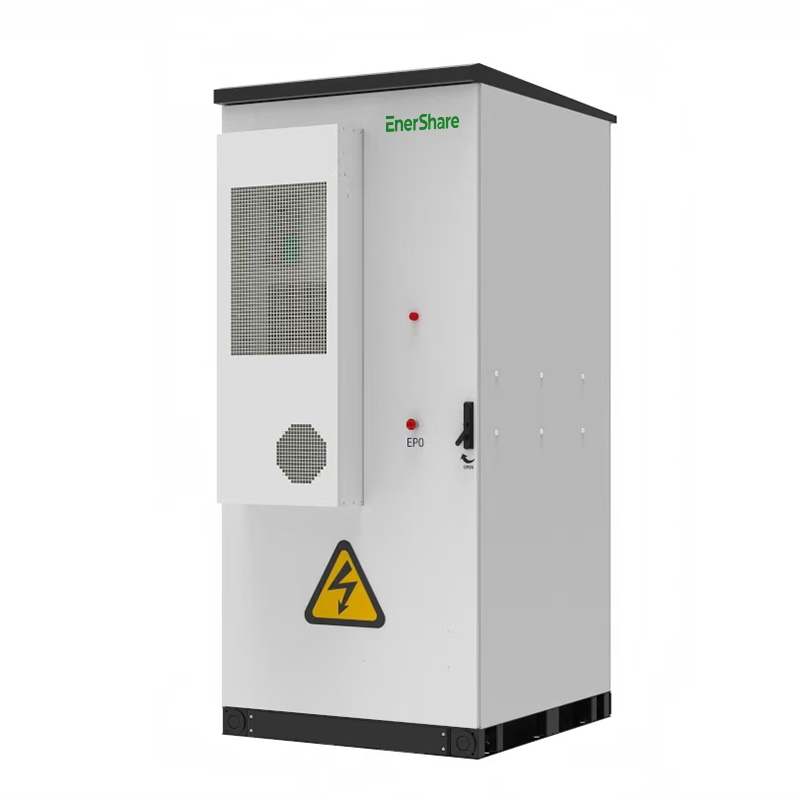
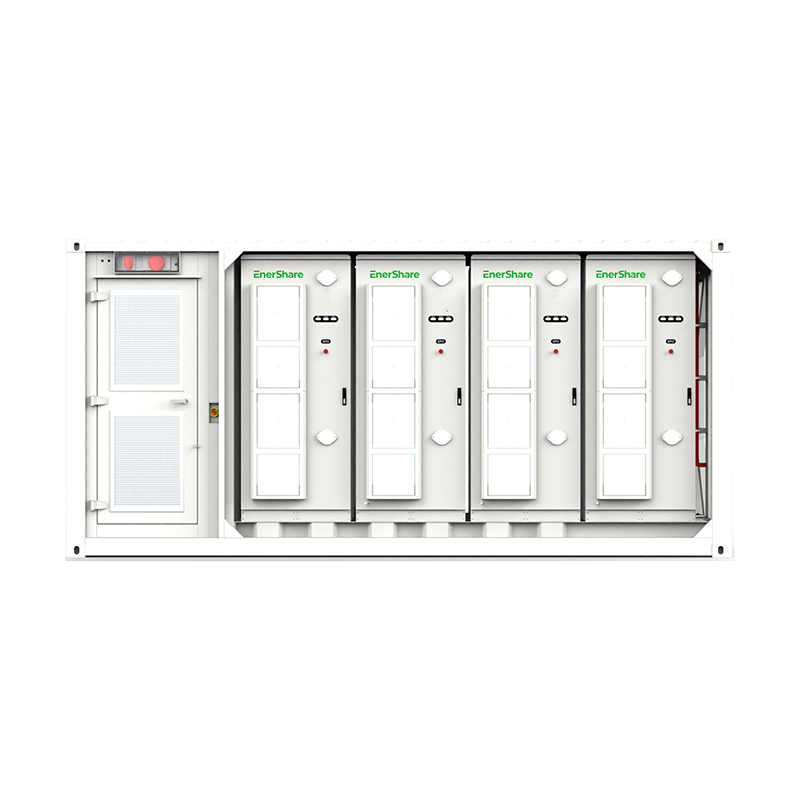
Two details in that table matter more than the kWh column. First, the cabinet brings its own PCS and PV inputs — it is a complete outdoor plant, not a battery that still needs an inverter. Second, the container is the only option in this list with system-level UL 9540A test data available, which decides US projects before any commercial argument begins. For a full view of the range, see EnerShare commercial energy storage solutions.
European banks and leasing companies have seen enough vendor models to discount them on sight — the underwriter's spreadsheet assumes one full cycle every day, a 100% demand shave and no degradation, which is precisely the model no real site delivers. Reality is less generous — and the honest version of the case still works:
| Site profile | Main value streams | Typical simple payback (indicative) |
|---|---|---|
| European site with demand tariff and PV | Demand shaving, self-consumption, arbitrage | 4–8 years |
| High demand charges, no PV | Demand shaving, arbitrage | 5–9 years |
| Weak grid with daily diesel runtime | Diesel displacement, outage ride-through | 10–28 months |
| Site adding DC fast charging | Avoided grid upgrade, demand shaving | 3–6 years |
Three corrections should be applied before believing any of those numbers. Utilisation: a battery that cycles 250 days a year, not 365, earns proportionally less. Demand ratchet clauses: some tariffs set billing demand on a rolling twelve-month maximum, which caps the benefit of a single good month. Degradation: capacity fades by roughly 2% a year in this chemistry, so year-eight savings are not year-one savings — and the warranty's end-of-life threshold, not its headline cycle count, determines whether the system is still doing its job.
Measured against that, a 10-year manufacturer warranty against a 4–8 year planning payback still leaves a substantial value window — long enough that European asset-finance structures and US third-party ownership models both pencil. The argument survives correction; it just stops being a marketing number.
Two quotes for the same capacity often differ by 20% for a reason that appears nowhere in the datasheet: the scope of the certificate. IEC 62619 covers battery safety at cell and battery level; IEC 62933-5-2 addresses grid-integrated electrical energy storage system safety; UN38.3 governs transport. In North America the vocabulary changes — UL 9540A test data, NFPA 855 spacing, NEC Article 706 — but the logic is identical. A module certificate does not automatically extend to a six-tower assembly, and a system tested as a 10 kWh unit is not tested as a 153.6 kWh unit.
For this platform, the documentation covers VDE, CE, UKCA, IEC 62619, CEC and UN38.3, with certificate documents and declarations provided with project quotations on request. In Europe that is a procurement question; in the US it is a permit question, and anyone who has watched a plan reviewer bounce a submittal over a missing UL 9540A appendix knows the answer decides whether the project proceeds at all.
Five questions, in this order, will separate a real offer from a brochure — the same five a European installer would send before releasing a purchase order:
| # | Question | What a weak answer looks like |
|---|---|---|
| 1 | Is the specified model physically in the European warehouse, and what written delivery date do you commit to? | "Available soon", "lead time on request", stock held outside the EU |
| 2 | What are the usable capacity, operating voltage, stackable module count and parallel expansion limits for this exact model? | A datasheet for a different configuration |
| 3 | Which inverters are approved for this system, and over which communication protocol? | An unqualified "compatible with all hybrid inverters" |
| 4 | Can you send the certificates for this configuration, with test report numbers and the tested setup? | A generic CE declaration and a cell-level test report |
| 5 | Which countries do you ship to, what is the warranty term, and who provides technical support in my language? | Warranty handled by a third party outside the EU |
Three claims deserve their own test, because they are the ones most often left vague: European spot stock — ask for the shipping origin and a written date; one-person installation — ask what each lift unit weighs and what aid is assumed in the man-hour figure; cable-free stacking — ask how many field-terminated connections remain and what the annual torque-check scope is.
| Parameter | Energy-CORE 1.0 / 153.6 kWh configuration |
|---|---|
| Chemistry | LiFePO4 (lithium iron phosphate), cobalt-free |
| Capacity per tower | 9.6 / 12.8 / 16 / 19.2 / 22.4 / 25.6 kWh (3–8 modules) |
| System capacity | 153.6 kWh with six towers in parallel |
| Nominal voltage per tower | 192–512 V (operating range 162–584 V) |
| Current per tower | 30 A continuous, 50 A peak (5 s) |
| Round-trip efficiency | ≥96% |
| Module weight | ≤36.5 kg with concealed handles, single-person handling with stacking aid |
| Tower weight / footprint | 129.5–312 kg; 650 × 260 mm; height 800–1,675 mm |
| Stack connection | Cable-free: modules connect directly, no DC harness between levels |
| Enclosure protection | IP65 aluminium case, outdoor-capable |
| Operating temperature | −10 to +55 °C |
| Warranty | 10 years, manufacturer-backed |
| Certification | VDE, CE, UKCA, IEC 62619, CEC, UN38.3 |
| Delivery model | European spot stock — standard build, ex-stock delivery, no container MOQ |
| Inverter compatibility | Deye, Solis, Solinteg and other mainstream three-phase hybrid inverters; compatibility list on request |
The same platform scales down as well as up: Power-CORE 1.0 carries 4.8–12 kWh per tower for apartments and single-phase upgrades, up to 80.4 kWh with six towers. For larger demands the architecture continues into the 215 kWh outdoor cabinet and the containerised Enerbank systems, so a site can start at 153.6 kWh and grow without changing its EMS logic.
For buyers who ask the fair question — "who exactly is behind this warranty?" — EnerShare has manufactured lithium storage for 15 years with its own production facility and an annual capacity of 3 GWh, roughly 200 MWh per month. Field references include a 500 kW / 1.5 MWh containerised system at a European metal plant, grid-connected to existing PV and cutting electricity costs by around 20%; a Finnish VPP project using three 100 kW / 215 kWh units across three sites; and a 143 kWh cabinet in Senegal that displaced generator runtime at an off-grid civil works site. More than 1 GW of systems across 44 microgrid projects in Africa underpin the same design approach.
Send 30 days of 15-minute interval data, your tariff structure and the inverter you plan to use. Our application engineers will confirm whether 153.6 kWh is the right envelope, state the continuous power it supports in your configuration, and give a firm ex-stock delivery date from the European warehouse. If a 215 kWh cabinet or a container is the better fit, we will say so — a bad fit costs more in warranty claims than a lost order.
Request a sizing proposal: info@enershare.cnA 153.6kWh modular battery storage system is a scalable commercial and industrial energy storage solution built from six 25.6kWh LiFePO4 towers connected in parallel. It stores electricity for solar self-consumption, peak shaving, load shifting and backup power, using a modular high-voltage architecture (192–512 V per tower), IP65 protection and direct module-to-module connections. See the full high-voltage stackable battery specifications for the complete platform.
Each tower supplies 30 A continuous and 50 A peak for five seconds. Six towers give 180 A continuous — about 72 kW at 400 V, or roughly two hours at full power — with short peaks of about 120 kW. Higher continuous power requires a cabinet or container with a larger PCS.
Typically sites with 20–300 MWh of annual consumption and 30–150 kW peak demand: workshops, hotels, restaurants, supermarkets, cold stores, small factories, offices and farms. At this scale a 100–200 kWh battery can shift most of the daily peak and still leave room for PV self-consumption.
Demand charges commonly make up 20–50% of a commercial bill. As an illustrative example only: at €12/kW/month, shaving 80 kW is worth about €960 per month or €11,500 per year. Actual savings depend on the tariff, the load profile and utilisation.
Start with 30 days of 15-minute interval data. Size power to the peak you want to shave and energy to the hours you need to hold it. Six towers hold about 72 kW for roughly two hours; if the site needs 150 kW continuously, start with a 215kWh cabinet instead.
Yes — 25.6kWh tower increments on the same DC bus and inverter, up to six towers (153.6kWh), with no new grid application. Beyond six towers the architecture changes to a cabinet or container.
Standard configurations are held in a European warehouse in Budapest, Hungary, so delivery is typically days to about two weeks rather than 6–10 weeks by sea freight. There is no container minimum, and replacement modules come from the same stock.
For the stacking work, yes — with a stacking frame or lift aid. Modules are 36.5 kg or less with concealed handles and connect directly to the module below. Electrical connection and commissioning still require a qualified electrician, and manual-handling rules should be checked.
Remote monitoring of cell voltage, temperature and state of charge, periodic firmware updates and an annual visual inspection. Because the stack is cable-free, there is no module-to-module terminal torque check — the task that consumes most annual service time on conventional racks.
Yes, with a compatible high-voltage hybrid inverter — Deye, Solis, Solinteg and other mainstream three-phase models; the current compatibility list is confirmed per inverter model. For AC-coupled retrofits a separate PCS is added, which also changes the available continuous power.
Choose the 215kWh outdoor cabinet when the site needs an integrated outdoor unit with a 100 kW PCS, PV inputs and fire suppression in one enclosure. Choose a container from 500kWh upward when continuous power exceeds roughly 150–200 kW, annual consumption is above about 400 MWh, or the project needs UL 9540A system-level testing for the US market.